Smooth Geomembrane
HDPE / LLDPE Lining Membrane — Smooth Surface
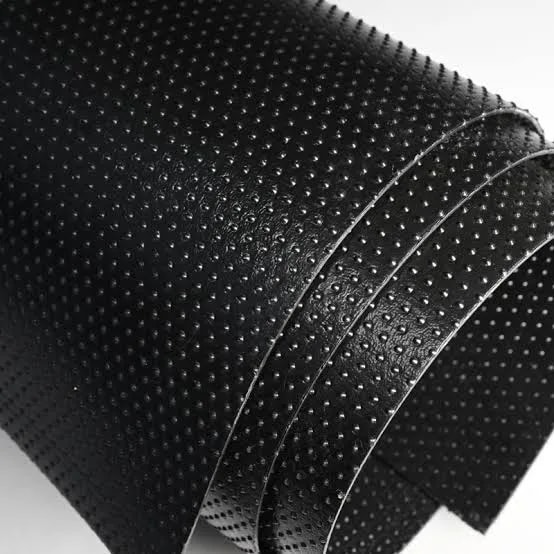
Produced in thicknesses from 0.50 mm to 3.00 mm in accordance with the GRI-GM13 and GRI-GM17 specifications, a smooth geomembrane forms a physically impermeable barrier between the ground and the liquid stored above it. From canal seepage to the base lining of a landfill, it performs the same function on every project where fluid loss is unacceptable: it does not let anything through.
- Category
- Lining & Sealing
- Product Group
- HDPE / LLDPE Lining Membrane — Smooth Surface
- Product Code
- SM-HDPE / SM-LLDPE
The performance of a geomembrane is measured by a laboratory report, not a sales pitch. Smooth geomembrane is produced by processing polyethylene raw material on an extrusion and calender line, and is offered in two formulations: HDPE (high-density polyethylene) and LLDPE (linear low-density polyethylene). Which type to choose is not an aesthetic preference — slope gradient, chemical exposure and expected service life determine that decision. On this page we explain, in technical terms, which type works on which project, to which standard it is tested, and what you should be asking before you buy.
What is a Smooth Geomembrane?
A smooth geomembrane is produced by melting polyethylene raw material, carbon black and an antioxidant additive package in an extruder and passing it through a flat die or calender system to form a single-piece, seamless roll. Two different formulation lines run during production:
**HDPE line:** The formulated density is kept at 0.940 g/ml or above, and the material is manufactured in thicknesses from 0.75 mm (30 mil) to 3.00 mm (120 mil) in accordance with GRI-GM13 — "Test Methods, Test Properties and Testing Frequency for High Density Polyethylene (HDPE) Smooth and Textured Geomembranes". This type offers high chemical and mechanical resistance at the cost of lower flexibility, and is the preferred choice on flat or gently sloping ground.
**LLDPE line:** The formulated density is kept at 0.939 g/ml or below, resin density typically falls in the 0.915–0.926 g/ml range, and the material is produced in thicknesses from 0.50 mm (20 mil) to 3.00 mm (120 mil) in accordance with GRI-GM17. Because it offers higher elongation and stress-crack resistance than HDPE, it is preferred on irregular ground, steep slopes and sites carrying a risk of dynamic settlement.
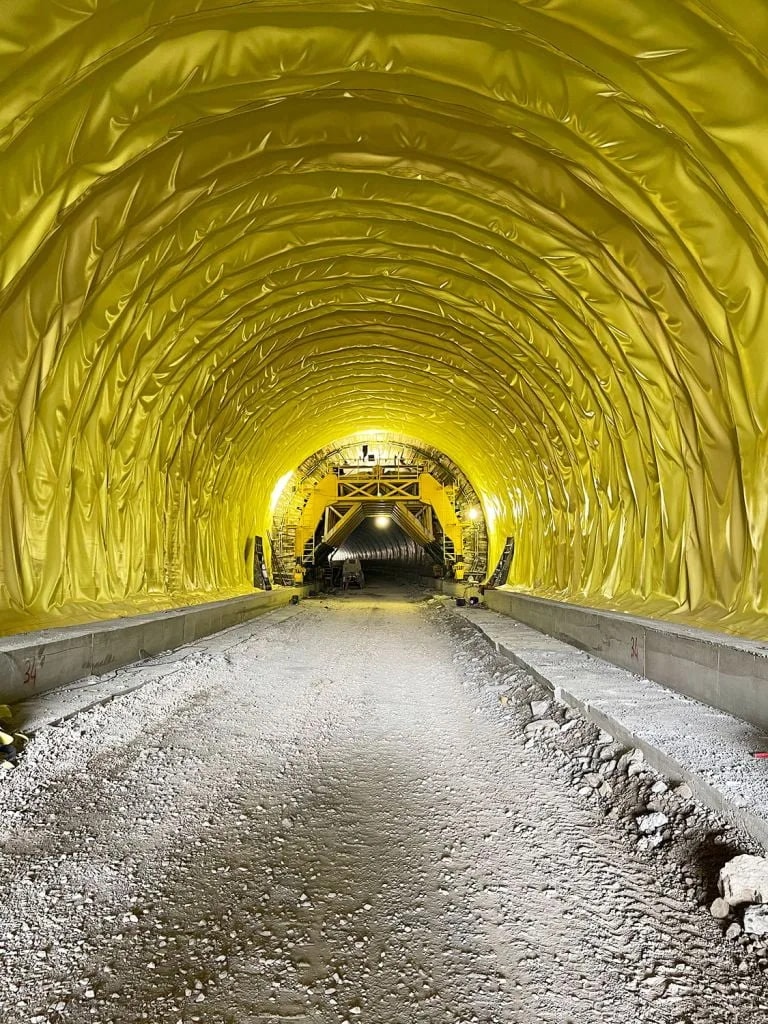
In Europe, where CE marking is required for dam and reservoir projects, the reference standard is EN 13361; this standard defines the properties of polymeric, bentonite-based and bituminous geosynthetic barriers used to control the seepage of drinking, fresh or salt water, and the test methods by which those properties are measured.
Post-production quality control works on the same logic for both lines: thickness, density, tensile strength, tear resistance, puncture resistance, carbon black content and oxidative induction time (OIT) are tested on samples drawn from each batch, and the results are recorded before dispatch.
Why this material?
It takes the cost of leakage out of the project
Water loss in an irrigation canal, loss of valuable metal solution on a mine site, the risk of groundwater contamination at a landfill — the common denominator in all of them is an impermeability layer that was not correctly selected. The right thickness and the right resin keep that loss close to zero for the life of the project.
Standards compliance reduces supply risk
A material tested under GRI-GM13/GM17 is not open to argument in terms of tender specification or site acceptance criteria (CQA). Documented conformity speeds up progress payments and acceptance processes.
Weldability shortens site duration
A smooth surface allows fast, repeatable jointing by both hot-wedge (dual-track) and extrusion welding. This has a direct effect on the site programme, particularly on large-area landfill and mining sites.
Long service life lowers the maintenance burden
GRI-GM13's requirement to verify antioxidant content by OIT testing targets a service life of roughly 200 years in buried conditions. This keeps maintenance requirements to a minimum throughout the post-closure monitoring period — which, at landfills, runs for years by regulation.
Where does it work on site?
Irrigation and Water Conveyance Canals
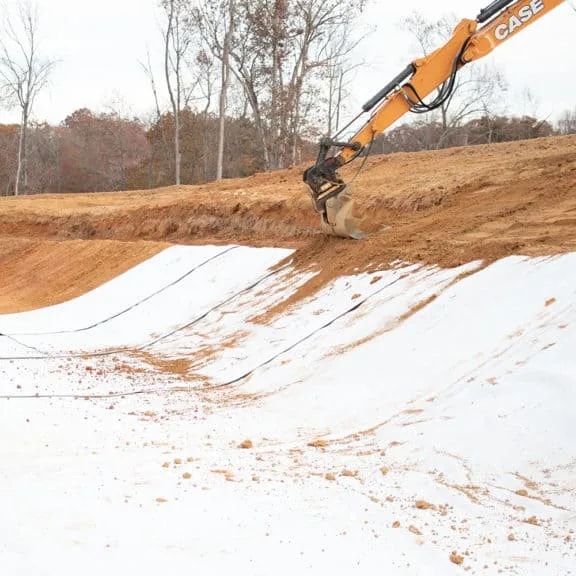
The porosity of an earth canal base causes a significant portion of the conveyed water to seep into the ground. Laid on the canal base and slopes, a smooth geomembrane stops that loss in practical terms. The low-gradient geometry of canals is directly compatible with the low-friction smooth surface of the geomembrane; no additional anchoring or special slope stabilisation is required, which lowers the cost per square metre.
Solid, Medical and Hazardous Waste Sites
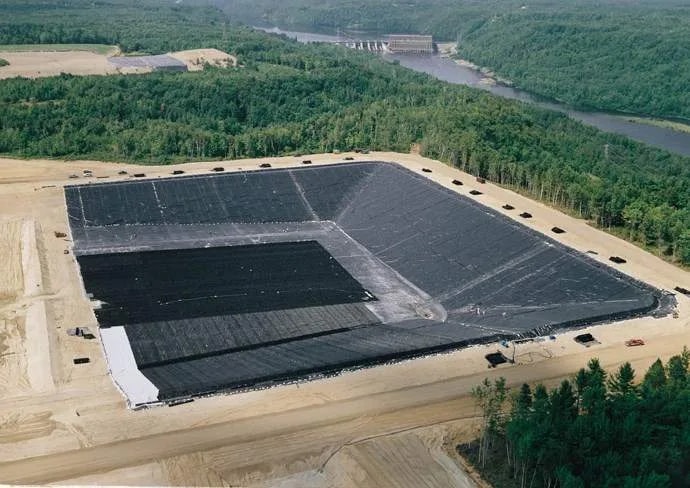
In Turkey this application is not a matter of preference but of the Regulation on the Landfilling of Waste: an impermeable layer preventing leachate from mixing into groundwater is mandatory at the base and on the side surfaces of a sanitary landfill, and the materials of that layer must comply with Turkish Standards Institution standards; minimum thickness and permeability values differ according to facility class (I, II, III). In site application the geomembrane is typically laid in 2 mm rolls, locked into anchor trenches, jointed by dual-track (hot-wedge) welding, and the weld lines verified by air-pressure testing. On medical and hazardous waste sites, chemical resistance data against leachate containing solvents and heavy metals is additionally required in the project specification.
Ponds and Pools
As well as preventing water loss in artificial ponds, it blocks the migration of salts and minerals from the ground and so prevents deterioration of water quality. If it is to be used for drinking-water storage, a food/water contact (migration) test — which falls outside the scope of the standard GRI-GM13/GM17 — should be requested separately.
Mine Sites
On heap leach pads and tailings dams a geomembrane both prevents the loss of valuable metal solution and stops cyanide- or acid-bearing drainage water from mixing into groundwater. Because slope gradients on these sites are generally steep, the high elongation and stress-crack resistance offered by LLDPE carries a lower tear risk than HDPE; in flat-bottomed ponds, however, HDPE's higher strength is preferred.
Oil Fields and Tank Farms
Used as a secondary containment layer beneath fuel and chemical tanks, it delays hydrocarbon reaching the soil and groundwater in the event of a tank leak. It serves the same function at the base of drilling mud pits and produced-water ponds. The decisive criterion in this application is chemical resistance to hydrocarbon derivatives, and requesting chemical compatibility data before supply is recommended.
Measured values.
The values below are typical/minimum limits. A lot-specific certified test report should be requested before ordering.
| Property | Test Standard | HDPE Type | LLDPE Type |
|---|---|---|---|
| Formulated density | ASTM D792 | ≥ 0,940 g/ml | ≤ 0,939 g/ml |
| Thickness range | ASTM D5199 | 0,75 – 3,00 mm | 0,50 – 3,00 mm |
| Surface type | — | Smooth | Smooth |
| Carbon black content | ASTM D1603 / D4218 | %2,0 – 3,0 | %2,0 – 3,0 |
| Elongation at break | ASTM D6693 | ≥ %700 | ≥ %800 |
| Standard OIT | ASTM D3895 | ≥ 100 dk | ≥ 100 dk |
| High-Pressure OIT | ASTM D5885 | ≥ 400 dk | ≥ 400 dk |
| Stress crack resistance (NCTL) | ASTM D5397 | ≥ 500 hours | — |
| Permeability | ASTM D5084 | ≤ 1×10⁻¹¹ cm/sn | ≤ 1×10⁻¹¹ cm/sn |
Thickness-dependent mechanical values (tensile, tear and puncture strength) are defined in the GRI-GM13/GM17 tables as separate minimum average roll values (MARV) for each thickness and increase in proportion to thickness. Prior to ordering, the current Manufacturing Quality Control (MQC) report and test certificate for the relevant thickness should be requested.
| Parameter | HDPE Type | LLDPE Type |
|---|---|---|
| Roll width | 2 – 7 m | 2 – 7 m |
| Roll length | 50 – 100 m | 50 – 150 m |
| Colour | Black (standard) | Black (standard) |
In brief
- Formulated density ≥0.940 g/ml for HDPE, ≤0.939 g/ml for LLDPE — the formulation is set by project requirement
- A wide thickness range from 0.50 mm to 3.00 mm
- UV stability provided by a 2.0–3.0% carbon black content
- Antioxidant content verified by OIT testing; a target service life of ~200 years in buried conditions
- A low-friction smooth surface, fast deployment and compatibility with hot-wedge/extrusion welding
- Mechanical performance verified on every batch by tensile, tear, puncture and stress-crack testing
- Chemical inertness to acids, bases, salt water and most hydrocarbon derivatives
Test standards
- GRI-GM13
- Specification for HDPE Smooth and Textured Geomembranes
- GRI-GM17
- Specification for LLDPE Smooth and Textured Geomembranes
- EN 13361
- Geosynthetic Barriers for Use in the Construction of Dams and Reservoirs
- TR Yönetmelik
- Turkish Regulation on Sanitary Landfilling of Waste — impermeable layer requirement
- ASTM
- D792, D5199, D6693, D1004, D4833, D5397, D1603/D4218, D3895, D5885, D5084
Rolls are dispatched wrapped in stretch film on wooden cores to prevent mechanical damage and UV exposure during transport and storage. They should be stored indoors, away from direct sunlight.
- The values above are GRI-GM13/GM17 minimum limit values; certified, thickness-specific test results for our product family are available on request.
- Applications in contact with drinking water require a separate food/water-contact suitability (migration) certificate.
- Chemical compatibility data (site-specific leachate, acid/alkali concentration, etc.) is provided separately on a project basis.
“Certified, thickness-specific test results for our products are shared with every customer on request.”
A choice grounded in data.
Geoals smooth geomembrane is bound to a production discipline in which the thickness, density, mechanical strength and OIT tests under GRI-GM13/GM17 are applied to every batch. This means a technical-office engineer comparing specifications has a concrete number in hand — not an abstract assurance, but a declaration of conformity backed by a test report. On the site side, the right resin (HDPE or LLDPE) is determined together with the project engineer on the basis of slope gradient, expected settlement and chemical exposure data; this reduces the risk of problems after installation.
Frequently asked
What is a geomembrane and what is it for?
A geomembrane is a synthetic barrier layer, produced from polyethylene-based raw material, laid between the ground and the stored substance in order to prevent the passage of liquid and gas. In applications such as landfills, canals, ponds and mine ponds, it physically stops leakage.
What is the difference between HDPE and LLDPE geomembrane?
HDPE has higher density (≥0.940 g/ml) and mechanical strength and is preferred on flat or gently sloping ground. LLDPE is lower in density (≤0.939 g/ml) and more flexible; its stress-crack resistance is an advantage on steep slopes, irregular ground or sites carrying a risk of settlement.
How is geomembrane thickness determined?
Thickness is calculated by the project engineer according to hydraulic head (the height of the water/liquid column), subgrade roughness, expected mechanical stress and the minimum requirements of the relevant regulation. In canal and pond applications 0.75–1.00 mm is typical; on solid and hazardous waste sites, regulation requires greater thicknesses (2 mm is frequently used in practice). The exact value must be confirmed by site-specific geotechnical calculation.
What is the service life of a geomembrane?
The antioxidant content verified under GRI-GM13/GM17 points to a target service life of roughly 200 years in buried conditions (under soil or cover). In exposed use this period is shortened by UV exposure; separate UV resistance data should be requested for exposed applications.
How is a geomembrane jointed (welded)?
The standard method is dual-track hot-wedge welding; the channel left between the two weld tracks is checked by air-pressure testing and the seal verified numerically. Extrusion welding is used for localised work such as patches, pipe penetrations and repairs. On critical projects, weld quality is additionally confirmed by destructive on-site sample tests (peel and shear).
Should I choose a smooth or a textured geomembrane?
A smooth geomembrane has a low friction coefficient; on flat or gently sloping ground (canals, ponds, tank bases) it is the economical and practical solution. On steep slopes, the high friction coefficient provided by a textured surface is preferred because it reduces the risk of sliding.
Is the use of geomembrane at landfills a legal requirement?
Yes. In Turkey, the Regulation on the Landfilling of Waste requires an impermeable layer at the base and on the side surfaces of sanitary landfills to prevent leachate from mixing into groundwater, and requires those materials to comply with Turkish Standards Institution standards.
What determines the price of a geomembrane?
Resin type (HDPE/LLDPE), thickness, roll width/length, surface type (smooth/textured) and the requested test/certification package all directly affect the price. For accurate project-based pricing, we recommend requesting a technical quote together with thickness and area information.
The ground conditions, hydraulic head and applicable regulatory requirements of your project are unique — and the right thickness and resin follow from them. Request a project-specific technical quote and factory quality-control report from the Geoals technical team.